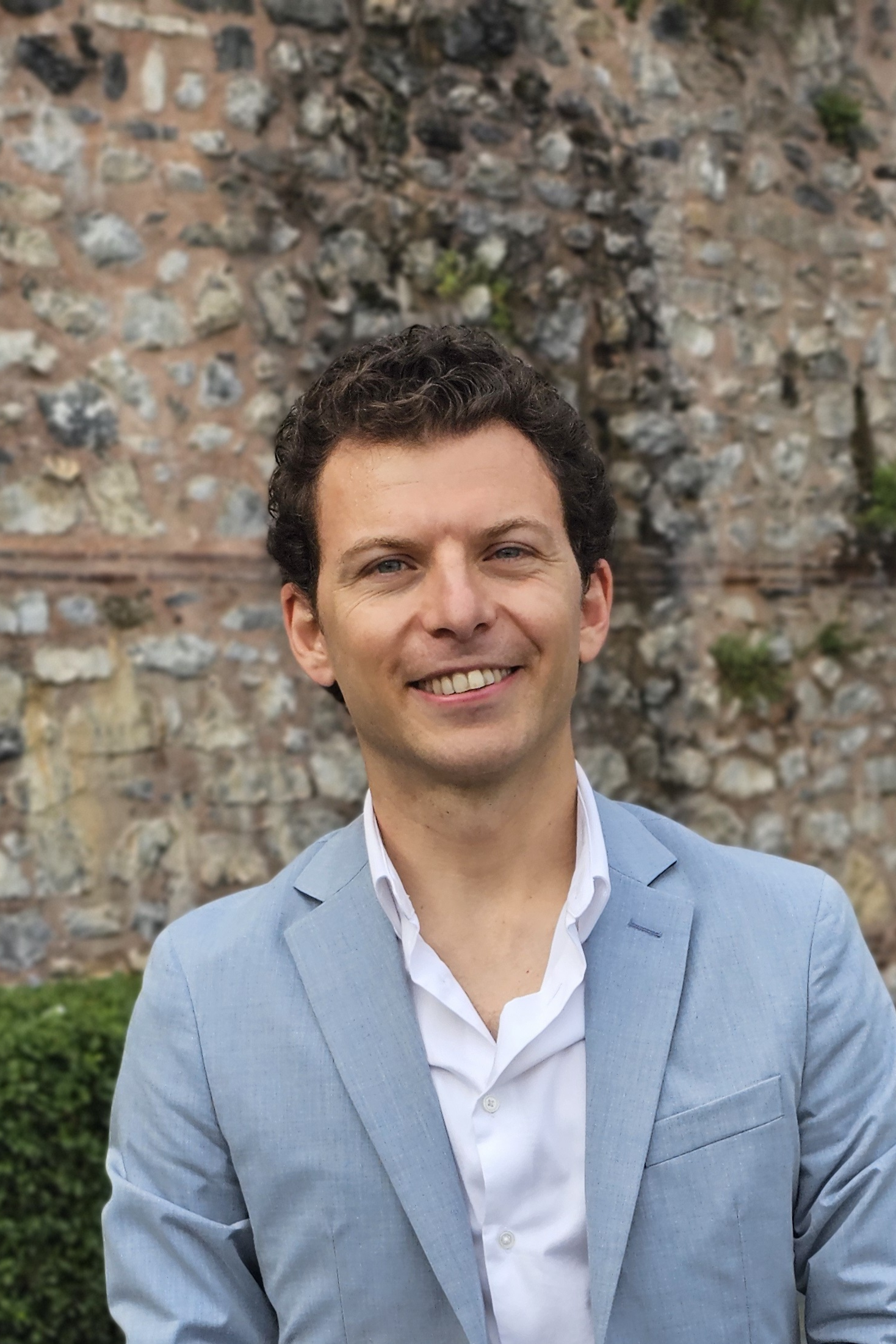
About me
I studied physics at Boğaziçi University (B.Sc. 2015, M.Sc. in Computational Science and Engineering 2019), then carried out my doctoral research at the German Aerospace Center (Deutsches Zentrum für Luft- und Raumfahrt), receiving my Ph.D. from the University of Bremen in 2025, followed by a postdoctoral position at the DLR. Since September 2026, I have been a Junior Research Group Leader in the AI for Climate and Physical Systems Lab, headed by Prof. Dr. habil. Veronika Eyring, at the University of Tübingen, the connAIx Research School for Applied AI in Heilbronn, and the Tübingen AI Center.
I believe that scientific knowledge should be simplified in order to convey it to people effectively. Otherwise, scientific facts alone will not be sufficient to safeguard the future of the Earth. With this idea in mind, I created a YouTube channel to publish videos and interviews on commonly misunderstood scientific topics.
My research develops machine learning methods to detect, understand, and simulate extreme weather and climate events. During my master’s, I focused on visualizing climate change data in Turkey and the MENA region and analysing the return periods of extreme weather events. In my Ph.D., I used unsupervised learning to show that extreme heat events occur far more often than classical statistical methods suggest, and applied a spatiotemporal Variational Autoencoder to reveal that recent Western European heatwaves reflect a genuinely new atmospheric circulation pattern rather than a simple continuation of past trends. My current work builds on this direction along two lines. The first is generative modeling, including physics constrained flow matching and diffusion based approaches, for climate downscaling and simulation of extreme events. The second is modular, lightweight Earth system model emulators that recombine learned components to run large ensembles and explore climate scenarios at a fraction of the cost of full physical models. My research interests span climate extremes, generative and representation learning, and physically interpretable machine learning for Earth system science.